
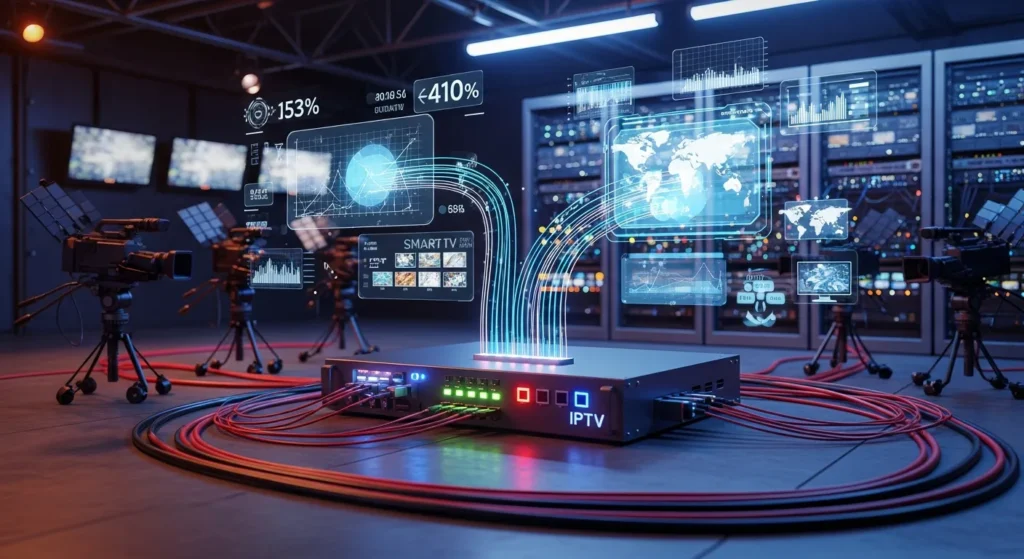

If you are looking for the best IPTV encoder box to enhance your streaming infrastructure in 2026, you’ve come to the right place. The world of television continues to evolve rapidly, and IPTV streaming remains at the center of that transformation. As more broadcasters and content providers shift toward IP-based distribution, the role of a high-performance IPTV encoder box has become more critical than ever for delivering seamless, high-quality content.
An IPTV encoder box is the hardware backbone behind professional streaming. It converts video signals (HDMI or SDI) into compressed digital formats such as H.264, H.265 (HEVC), or AV1. While most viewers focus on the streaming experience itself, the quality is directly influenced by the encoding infrastructure and ASIC or FPGA-based hardware acceleration that professional units provide.
Key Takeaways
Leading Models: Top IPTV encoder hardware for 2026.
Next-Gen Codecs: Why HEVC (H.265), AV1, and SRT matter.
Latency Secrets: The difference between software and hardware encoding.
Technical Authority: How professional encoding affects the end-user.
Why Encoding Quality Matters in 2026
In 2026, professional streaming standards have reached new heights. The difference between average and premium streaming often comes down to:
1. Compression Efficiency (HEVC & AV1)
Modern encoders support AV1 and H.265 / HEVC, reducing bandwidth usage by up to 50% without compromising visual clarity. This is essential for maintaining 4K and 8K stability over standard broadband.
2. Low Latency & Hardware Acceleration
For live events, software encoding often introduces unacceptable delays. Professional IPTV encoder boxes typically utilize FPGA or ASIC-based acceleration to reduce processing overhead, ensuring near-instantaneous transmission through the SRT (Secure Reliable Transport) protocol.
3. Bitrate Ladder Optimization
A key technical advantage of high-end encoders is their ability to manage complex Bitrate Ladder configurations. This allows for smooth Adaptive Bitrate (ABR) streaming, ensuring the viewer never experiences a total blackout during network fluctuations.
Top IPTV Encoder Box Recommendations for 2026
| Model | Max Resolution | Ideal For | Price Range |
| Haivision Makito X4 | 4K UHD | Enterprise & TV Stations | $5,000–$7,000 |
| Teradek Prism Flex | 4K UHD | Live Events & Sports | $3,000–$5,000 |
| Videon EdgeCaster | 4K UHD | Portable Production | $2,000–$4,000 |
| ZeeVee ZyPerHD | 1080p | Corporate Broadcasting | $1,000–$3,000 |
| Blackmagic Web Presenter HD | 1080p | Entry-Level Streaming | $500–$1,000 |
How Professional Encoding Impacts End-User Experience
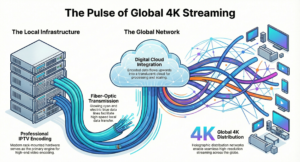
Most viewers never see the encoder hardware—but they experience its effects every second. High-end encoding directly influences:
Reduced Buffering: Optimized bitrate ladders ensure the stream adapts before it freezes.
Visual Fidelity: Cleaner images during motion-heavy scenes (like football) due to superior motion estimation algorithms.
Stability: Faster channel switching and reliable 24/7 uptime.
Professional IPTV infrastructures invest heavily in these backend encoding pipelines to ensure that the end-user receives a stable, high-bitrate stream regardless of their device.
Do You Need an IPTV Encoder to Start an IPTV Business?
Technically, yes—but practically, not always. Building a fully independent headend requires significant capital in hardware and CDN distribution. For many entrepreneurs, starting with professional guidance is a more cost-effective way to access high-grade streaming setups without the massive upfront investment. If you need help determining the right infrastructure for your project, you can always contact our technical team for a personalized consultation.
Looking for a service that already utilizes this high-end infrastructure? Check out our premium IPTV plans for a buffer-free experience and 4K stability.
FAQ
What is the difference between an IPTV Encoder and an IPTV Player?
An encoder creates the stream (Broadcaster side); a player (Firestick, Apps) decodes it (User side).
Is HEVC better than H.264?
Absolutely. HEVC provides better quality at much lower bitrates, which is the industry standard for 4K in 2026.
Does hardware encoding beat software?
Yes, hardware-based encoding (ASIC) is more stable and provides much lower latency for live environments.
Conclusion
Choosing the best IPTV encoder box in 2026 depends on your scalability goals and technical requirements. Whether you are deploying a Haivision Makito X4 for a TV station or a Blackmagic unit for a small studio, understanding the underlying technology—from codecs to hardware acceleration—is essential for long-term streaming success.



[…] enterprise deployments and television stations, the Haivision Makito X4 delivers 4K UHD encoding in the USD 5000-7000 range. The Teradek Prism Flex targets live […]